Source High Accuracy Digital Turbidity Meter for Lab, Medical, and Chemical Analysis
Find and compare 30 high accuracy digital turbidity meter options from verified Chinese suppliers. Evaluate models like TU1000P and WGZ-2000A based on repeatability, resolution, and interface connectivity for precise water quality testing.
Key considerations
Products List




Comprehensive Sourcing Guide
High Accuracy Digital Turbidity Meter Sourcing Guide
Procuring high accuracy digital turbidity meters requires a strategic approach that balances precise optical measurement capabilities with the specific operational constraints of your laboratory or field environment. These instruments are essential for quantifying water clarity by measuring the scattering of light, a critical parameter in water treatment, environmental monitoring, and pharmaceutical research. Buyers must navigate a market where specifications vary significantly between desktop laboratory units and portable field devices, necessitating a clear definition of the intended application before engaging with suppliers.
The decision-making process begins with identifying the correct form factor and measurement principle that aligns with your workflow. While some units are designed for fixed desktop use in controlled lab settings, others offer portability for on-site testing, each carrying distinct advantages regarding power requirements and sample handling. Understanding the distinction between these configurations is vital, as the choice dictates the necessary accessories, such as specific sample bottles or power sources, and influences the long-term maintenance strategy for your procurement team.
Product Scope and Observed Listing Signals
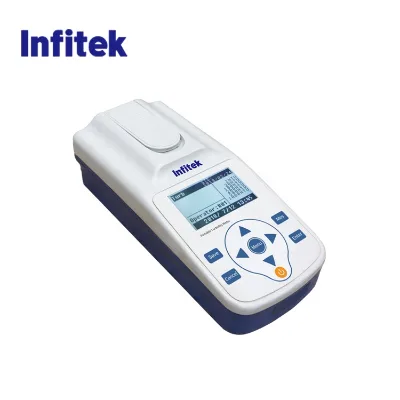
The current market for digital turbidity meters presents a diverse range of models, including specific series like the TU1000P, WGZ-2000A, and TS-620, which cater to different precision and usage requirements. Listings indicate that these devices are primarily manufactured in Zhejiang, China, and are available in various configurations ranging from standard desktop structures to portable units weighing as little as 250 grams with battery inclusion. This variety allows buyers to select equipment that fits specific spatial constraints, whether the device needs to sit on a lab bench or be carried into the field for immediate water quality assessment.
Observations of product listings reveal significant variation in sample handling capabilities, with some models requiring specific bottle dimensions of φ 25 mm×65 mm and a sample volume between 20 and 25 ml, while others may support different standard sizes. The data storage capacity also varies, with certain units capable of storing up to 2000 sets of data, which is crucial for facilities that need to maintain extensive historical records without external connectivity. Buyers should carefully review the physical dimensions and packing specifications, as some units are packaged in standard cartons while others offer customized packing solutions to meet specific shipping or storage needs.
Technical Specifications to Verify
When evaluating the optical performance of these meters, the determination principle is a critical factor, with many high-accuracy models utilizing a 90° scattered light method to ensure reliable readings across different turbidity ranges. The measuring range is another key specification, with observed models supporting scales such as 0-20 NTU, 0-400 NTU, and up to 4000 NTU, allowing for the detection of both clear water and highly turbid samples. Buyers must verify that the resolution of the device, which can be as fine as 0.01 NTU, matches the sensitivity required for their specific testing protocols to avoid data granularity issues.
Stability and repeatability are paramount for ensuring consistent results over time, and suppliers should provide clear data on zero drift and repeatability metrics. High-performance units often demonstrate a repeatability of ≤0.5% and a zero drift of ±0.5% F.S., whereas other models may exhibit slightly higher tolerances of ≤0.8% or ≤1% of F.S., depending on the intended application intensity. Additionally, the interface capabilities, such as USB connectivity, and the display type, whether digital or otherwise, should be confirmed to ensure seamless integration with existing data management systems and user-friendly operation.
Compliance and Safety Documentation
Regulatory compliance is a non-negotiable aspect of sourcing industrial instrumentation, and buyers should verify that the equipment carries recognized certifications such as CE, which indicates conformity with health, safety, and environmental protection standards for products sold within the European Economic Area. While some background information may reference international standards like ISO 7027 or ASTM D1889-00, the primary verification step for the buyer is to confirm that the specific unit being purchased has the necessary documentation to meet the regulatory requirements of the destination market.
Safety and operational documentation must also cover the environmental conditions under which the device can function reliably, including operating temperature ranges and humidity limits. For instance, portable units are often rated for operating temperatures between 5°C and 35°C with a relative humidity of ≤80% Rh (Non-Condensing), ensuring that the electronics remain stable in various field conditions. Buyers should request detailed user manuals and safety data sheets that explicitly state these environmental limits to prevent equipment failure due to improper usage in extreme climates.
Cost Drivers and Commercial Terms
The pricing for digital turbidity meters varies widely, with observed ranges spanning from approximately 49 USD to 1400 USD, reflecting differences in build quality, measurement precision, and feature sets. The cost is heavily influenced by the complexity of the optical system, the inclusion of advanced features like automatic temperature compensation, and the durability of the housing materials, which can be a combination of plastic and metal or entirely plastic. Buyers should analyze the total cost of ownership, considering that higher initial investment often correlates with better long-term stability and lower maintenance requirements.
Commercial terms such as Minimum Order Quantity (MOQ) and customization options play a significant role in the procurement strategy, with observed MOQs ranging from 1 to 5 units. Many suppliers offer customization services, including OEM support and tailored packing solutions, which can add value for buyers requiring specific branding or specialized packaging for logistics. It is essential to clarify the warranty terms, as some suppliers provide coverage for up to 2 years, which serves as a critical risk mitigation factor for high-value equipment purchases.
Supplier Qualification and Quality Control
Supplier qualification should focus on the manufacturer's ability to provide consistent quality control and technical support, particularly given that the majority of these devices originate from the Zhejiang province in China. Buyers should assess the supplier's track record in delivering products that meet the specified technical parameters, such as the exact resolution and repeatability figures observed in the product listings. Verifying the supplier's capacity for customization, including the ability to produce units with specific interfaces or sample bottle requirements, is also a key indicator of their flexibility and responsiveness.
Quality control processes must be transparent, with suppliers expected to provide evidence of their manufacturing standards and testing procedures. The use of standardized materials, such as plastic or metal components, and adherence to specific product standards like 180 × 70 × 40 mm dimensions for certain models, indicates a structured approach to production. Buyers should inquire about the supplier's internal testing protocols to ensure that every unit shipped meets the claimed specifications for zero drift and repeatability before it leaves the factory.
Long-Term Procurement Checks
Sustaining a successful procurement relationship requires establishing clear protocols for long-term maintenance and calibration, as the accuracy of turbidity meters can degrade over time without proper care. Buyers should verify the availability of spare parts, such as sample bottles or specific optical components, and ensure that the supplier offers ongoing technical support for troubleshooting and software updates. The warranty period, often cited as 2 years, should be clearly understood in terms of what it covers, including potential issues with the display, interface, or internal sensors.
Future-proofing the procurement strategy involves selecting suppliers who can adapt to evolving industry standards and technological advancements. As measurement standards like ISO 7027 continue to be relevant, buyers should ensure that their chosen equipment remains compatible with updated testing methodologies. Regular reviews of the supplier's performance, including their ability to meet lead times and maintain consistent product quality, will help mitigate risks and ensure a reliable supply chain for critical water quality monitoring needs.
FAQs
What is the measuring principle of these turbidity meters?
The devices use a 90° scattered light determination principle to ensure accurate readings. This method is standard for measuring turbidity in chemical and medical research applications. It provides reliable data for lab environments where precision is critical for sample analysis and quality control processes.
Can these meters be customized for specific lab needs?
Yes, customization is available for these instruments. Buyers can request customized packing options, such as cartons or specific configurations. The products support OEM branding and can be tailored to meet specific laboratory requirements, ensuring the equipment fits seamlessly into existing workflows and branding strategies.
What are the repeatability and zero drift specifications?
Repeatability is typically ≤0.5% or ≤0.8%, depending on the model. Zero drift is specified as ±0.5%F.S or ±0.8%F.S. These metrics ensure consistent performance over time. High stability is maintained through digital display technology and robust internal components designed for continuous laboratory use without significant signal degradation.
What sample volume and bottle size are required?
The meters require a sample volume of 20 to 25 ml. The standard sample bottle size is φ 25 mm × 65 mm. This specific volume ensures optimal light path interaction for accurate turbidity measurement. Users must prepare samples within this range to achieve the stated resolution and accuracy levels.
Are portable options available for field testing?
Yes, portable models are available alongside desktop units. Portable versions weigh approximately 250g with batteries included and operate between 5 to 35°C. They feature manual or auto temperature compensation and support USB data storage. These units are ideal for on-site chemical or medical research where mobility is essential.
What certifications and standards do these products meet?
The products hold CE certification, indicating compliance with European health, safety, and environmental protection standards. They align with general industry expectations for laboratory equipment. While specific standards like ISO 7027 are referenced in background contexts, the CE mark is the primary verified certification for market access and regulatory compliance.